
Welcome 2026
The year ahead brings us new hope, new plans and fresh possibilities.
Allison and Lynn’s story (pictured above and story below) captures the essential truth about the dementia journey, whether you’re directly impacted or you’re providing support. There are adventures to embrace, there’s joy to experience, and many unexpected wins when you simply say ‘yes, let’s try that.’
This Alzheimer Awareness Month, we’re sharing the latest insights in research, special stories from behind the scenes, and key reflections from community events.
We hope you feel the warmth and inspiration of local progress in action and continue to help build the StillMe social movement for change with us.
This month, we’re debunking a common myth about dementia and highlighting what you can (and can’t) necessarily ‘blame your family’ for.
Happy New Year,
Barb Ferguson, Executive Director
Embrace the Adventures, Follow the Joy
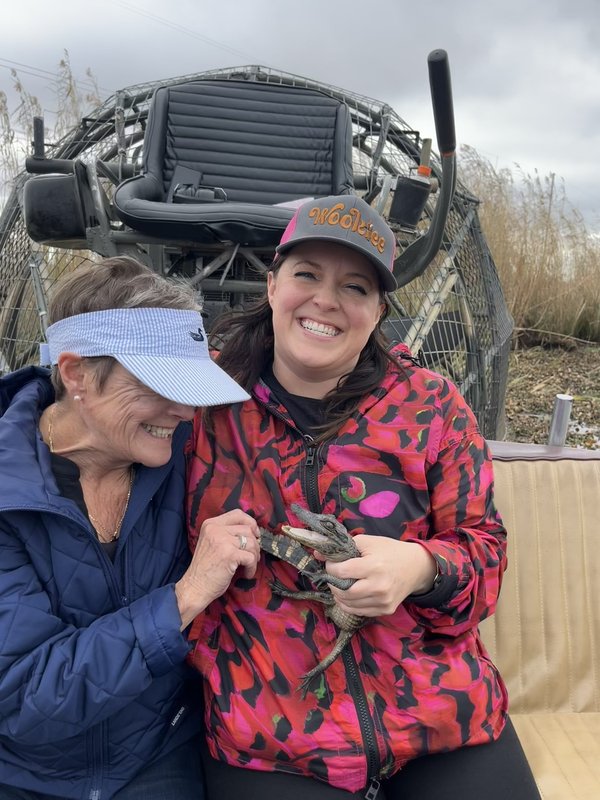
Allison Moore's mother, Lynn, is a fan of The History Channel's TV personality, Dusty Crum - the "Python Wildman." So when she announced she was hesitant to go to the Florida Everglades to see the star, Allison gently encouraged her. "I have a feeling that once we go there, you're not going to want to leave," she said with a smile. On the drive back from their alligator-watching adventure, Lynn declared it was one of the best trips they had ever taken.
This is what caregiving looks like for Allison - a deliberate practice of saying "yes, and..." instead of accepting limitations. As her mother navigates cognitive decline, Allison has crafted an unconventional approach: embrace the adventures, follow the joy, and let the world surprise them both.
The Art of Saying Yes
Allison lives across the street from Lynn’s condo in Calgary, close enough to help but far enough for independence. When in Florida, where they spend winters together while Allison works remotely, they share the same space. The proximity allows Allison to notice changes - Lynn’s voice sounds different now; slower. Decision-making has become harder. But what hasn't changed is her capacity for delight.
When Allison discovered that Dusty Crum owned a pizza place near their Florida home, she took Lynn there. They got lucky - Dusty himself walked in. Lynn was thrilled. Later, Allison surprised her with a three-hour swamp buggy tour where she sat next to Dusty, chatting away. At the end, he told her, "I love you, Mom!" "At that moment," Allison recalls, "nobody was higher in her estimation than Dusty."
Meeting Her Where She's At
What makes Allison's approach work isn't just the adventures, it's her willingness to meet her mother where she is. When Lynn fixates on needing Windex immediately, Allison doesn't fight it. "All right, Mom. That's what we're doing today." When she jokes about being radioactive after her PET scan, Allison laughs alongside her.
"I don't get upset when she does something unusual," Allison says. "If she makes mistakes, I just ask, 'Mom, what happened?' Not 'Why did you do this?'"
Seeking Light
What can other caregivers learn from Allison's approach?
Don't let fear of unpredictability keep you isolated. Don't let embarrassment keep you home. Find the spaces where judgment disappears. Seek out experiences that make your loved one light up. For Lynn, it's bird watching, and visits with babies and dogs. So, Allison seeks those things out.
Allison has also learned to prioritize differently. She used to rush to see everyone when returning to Calgary after a winter away, filling her schedule with friends’ local plays, concerts, and drag shows. Now she sleeps. She cancels plans. She is learning to prioritize her own care. "Nobody benefits from being around me when I'm overworked," she says simply.
Joy is Possible. Joy is the Point.
Recent adventures for the duo include a trip to Las Vegas to see Barry Manilow for Mother's Day, a visit from Lynn’s best friend, and participating in Mardi Gras events in New Orleans, where she was born.
These aren't bucket list items checked off with desperation; they're invitations to wonder and experience life, offered with confidence that joy is still possible, still worthwhile, still the point. "You can still have fun. You can still experience adventures," Allison insists.
Lynn has embraced her own philosophy: "Pour me an extra glass of wine. These are my final days. I have earned this."
No fear, no shame, just gratitude for every remaining moment.
Adventures are waiting.
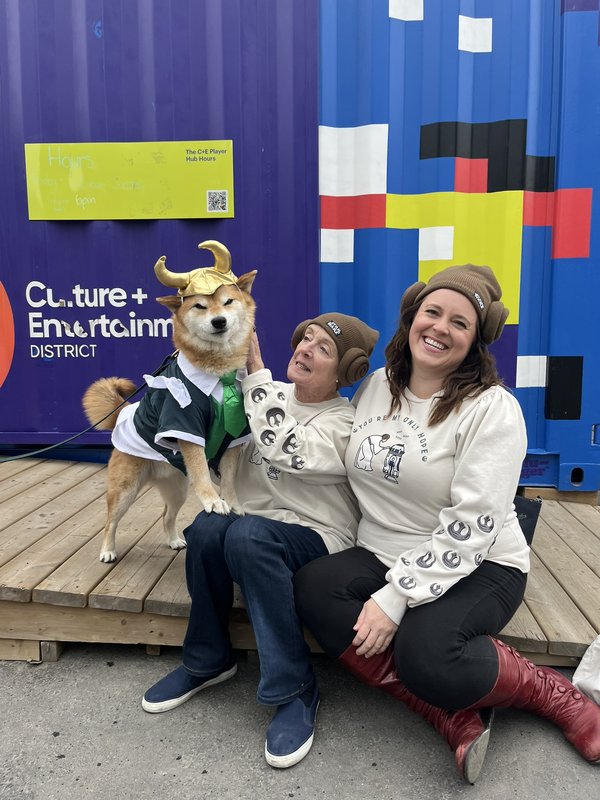
For a full story of this mom and daughter, visit StillMe.ca.
The Latest Research - What it could mean to you
In late October, Health Canada approved the first disease-modifying treatment for Alzheimer's disease authorized for use in Canada. This is a significant milestone for anyone who has been touched by Alzheimer's disease.

Eager to learn more?
Join Dr. Zahra Goodarzi to get a clear, up-to-date look at the breakthroughs shaping the future of dementia care. We’ll talk about what’s happening in the world of dementia science - what’s new, what’s showing promise, and what might be coming next. And we’ll explore how current discoveries are helping shape understanding, treatment, and support for people living with dementia and those who care for them.
Register Now
Click here
Calgary's Groundbreaking Dementia-Inclusive Park Takes Shape
Canada's First Public Dementia-Inclusive Park Coming Late 2026
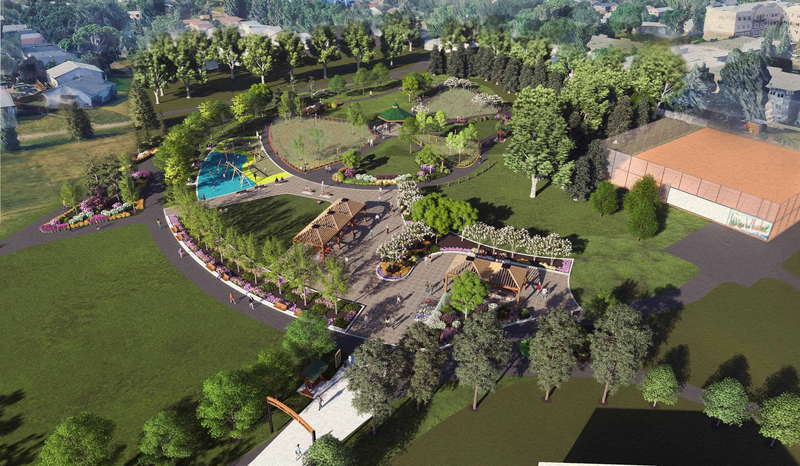
Rendering Source: Parks Foundation
During the quiet days of the COVID-19 pandemic, when people sought refuge outdoors, two separate conversations were happening that would ultimately converge into something extraordinary.
Dr. Dallas Seitz, a former University of Calgary professor and dementia researcher, pondered a question: "I like spending time outdoors for my own mental health and wellbeing, and I started wondering what that looks like for someone living with dementia."
At the same time, Kim Brundrit and her colleagues at Alzheimer Calgary were dreaming bigger. "We started thinking about what a Dementia Inclusive Community could look like," she recalls.
With Dr. Seitz's research and Alzheimer Calgary's vision, Parks Foundation Calgary saw the potential to unite these ideas into an actionable project. They brought together partners, secured funding, and drove the initiative from concept to construction.
"Parks Foundation championed this project from day one," says Barb Ferguson, Executive Director of Alzheimer Calgary. "They had the expertise, resources, and determination to turn our collective vision into reality."
Five years later, those questions have blossomed into reality. Construction is now underway on the Martin Family Legacy Garden - Canada's first public dementia-inclusive park.
From Vision to Reality
Funded by a grant from the Alzheimer's Association in the U.S., Seitz and his team studied how people living with dementia interact with the outdoors. "We thought, what if we could create an outdoor space designed with dementia in mind?" Seitz shares.
"We wanted a visible way to show what being dementia-inclusive means and help people understand it," says Brundrit.
What emerged was a shared vision: a safe gathering place for people living with dementia, their caregivers and families, and a space designed to educate the broader community and reduce stigma.
Designed With, Not For
From the beginning, people living with dementia were at the centre of the process. The project team brought together an extraordinary coalition: Dementia Network Calgary, people living with dementia, caregivers, care providers, researchers, and nearby community associations.
"We held engagement sessions and asked, what would make it a place you want to visit?" Seitz recalls. "Their ideas directly shaped the design."
People wanted a place to watch children play, walk safely, sit with friends, and host family celebrations without worry.
They wanted mental stimulation through nature, and opportunities for exercise and meaningful connections with others.
One caregiver's response captured the urgency: "I haven't left the house in 3 months. My husband was so ashamed to be out in public. This literally will save our lives."

Design for Dignity
Designing a park for people living with dementia requires rethinking how space is experienced. The team considered every detail: wayfinding systems using icons instead of words, safety features to allow wandering without visible fencing, accessible seating, wide paths to accommodate walkers and cyclists, moving art installations, and other visual elements.
"We looked at things that make being outside hard - mobility issues, sensory overload, cognitive fatigue - and designed for dignity, not just access," says Seitz.
A Space that Heals and Educates
"There's strong research showing that time spent outdoors improves mood, attention, and even reduces inflammation," explains Seitz. "It helps the brain reset. Even passively sitting in nature can have a positive effect."
For caregivers, the park offers a shared activity that's low-stress and meaningful. "As the disease progresses, it's a relief to simply be together in a place that doesn't demand words," Seitz notes.
But the park serves another crucial purpose: education and visibility. With more than 20,000 people living with dementia in Calgary, the park makes them visible in a positive, dignified way. “It's a place for people to see what dementia looks like," says Brundrit. "We've been deliberate about drawing others in."
The park will host awareness events and welcome schools learning about dementia and organizations serving people with cognitive disabilities.
Recognition and Support
The innovative project has already garnered significant recognition, receiving the 2025 Park Excellence Award from the Alberta Recreation and Park Association.
This $4 million project was made possible through remarkable collaboration and generosity. Support from the Government of Alberta and Alberta Blue Cross, along with countless contributions from individuals, foundations, and corporate partners - including the Martin Family, whose generous support led to the park being named the Martin Family Legacy Garden - demonstrates a shared commitment to creating a more inclusive society where everyone can enjoy the outdoors to the fullest, regardless of their cognitive abilities.
Ground was broken in May 2025, marking a pivotal moment for Calgary and communities everywhere watching this initiative unfold.
A Model for Canada
With no similar public spaces in Canada, Calgary is pioneering something unprecedented. While a few parks exist in Australia, New Zealand, and the UK, the Martin Family Legacy Garden represents innovation on a global scale.
"Parks Foundation Calgary's leadership in this project demonstrates what's possible when an organization commits to meaningful innovation," notes Ferguson.
"This isn't just a park for people with dementia," emphasizes Seitz. "It's a park for anyone." The intergenerational space welcomes children, families, and community events, creating opportunities for connection across generations and abilities.
For Seitz, whose career has often been defined by the clinical challenges of dementia, this project has offered something rare: "This is the most positive thing I've worked on in my career. So much about dementia is challenging. This has sparked hope."
"This is the most positive thing I've worked on in my career. So much about dementia is challenging. This has sparked hope." - Dr. Dallas Seitz
Looking Ahead
Brundrit hopes the park will build confidence: "People may become more willing to go out to other places. They'll feel acknowledged and part of the community. They'll feel love spread." Her advice to other communities considering similar projects: "Involve people who are directly impacted from the very beginning. Invite them to be part of the conversation right away. They're the experts."
Seitz echoes this sentiment: "Start with the people you're designing for. Talk to them early and often. Include them not as tokens, but as co-creators. You'll be amazed by what emerges."
Community Gathering Tackles System Navigation Challenges
Listening, Learning, Leading
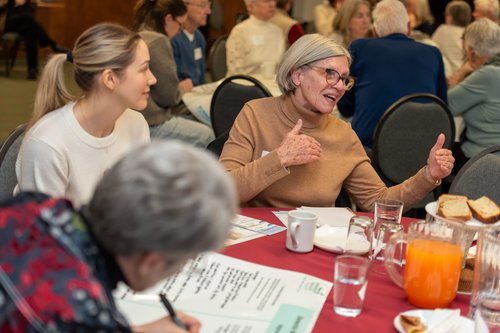
Care partners and people living with dementia got together recently for a Dementia Network Calgary (DNC) community gathering to help shape the future of dementia care in Calgary. "We bring people together and work collaboratively to develop ideas for solutions to make Calgary a more dementia-inclusive city," explains Eleanor Finger, representing the Network.
A Collaborative Approach to A Significant Challenge
The gathering centred on research findings from Dr. Gwen McGhan and Dr. Deirdre McCaughey of the University of Calgary, which identified system navigation as one of the most significant challenges facing care partners - a priority the Network has been hearing about consistently.
"System navigation has been identified as a significant challenge for people with lived experience and for people working in the system," says Finger. "It results in decreased quality of care, increased stress, and frustration."
What We Heard: "You don't know what you don't know"
The event represented a crucial step in finding out. Drs. McGhan and McCaughey shared their research findings to validate what their team has learned and, most importantly, discuss how findings can be applied.
Participants painted a clear picture of the barriers they face: diagnosis takes considerable time, with family doctors often having limited knowledge of dementia. After diagnosis, a lack of clarity about what happens next and inconsistencies in referrals to services. One caregiver shared: "It took me seven years to learn about Alzheimer Calgary and the resources available."
"People don't know where to start; there isn't a roadmap," attendees explained. Once in the system, challenges persist: long wait times, inconsistent care worker training, exhaustion from being "shuffled around and having to repeat your story over and over again to different professionals."
Ideas for Solutions
Attendees offered concrete solutions born from their daily lived experiences. These are the insights of people navigating the system every day, who know firsthand what would make a real difference:
- Standardized dementia assessments
- Better training for health professionals
- A general overview at diagnosis about the dementia journey
- A single professional as the point of care
- Clear information about funding
- Transparent and proactive communication
- More opportunities for engagement
- Caregiver supports from the beginning
- More person-centred care
Taking Action
The insights gathered won't sit on a shelf. The DNC Strategic Council - made up of system leaders and people with lived experiences, whose role is to guide and ensure the Network's actions align with community priorities - will meet to determine which actions to pursue first.
Beyond that, learnings from the community gathering will be shared with leaders from across the system to discuss how to tackle priorities on a larger scale.
"We'll take what we heard further into the Network community to explore what we can do to help address what people are sharing with us," Finger explains.
The Network will continue working with the researchers and other partners to identify concrete steps toward making system navigation better; turning research into reality, and frustration into solutions.
A Network that Listens
The afternoon of sharing and community represented something fundamental about the Network's approach: the belief that those with lived experience aren't just recipients of services, they're essential partners in designing better systems.
"The voices of people with lived experience are necessary to inform our work," says Finger. "We are committed to staying in touch with what they need. The community gathering was an opportunity for the Network to carry out what it was created to do - convene, listen, learn, and prepare us to collectively lead change.”
For care partners and people living with dementia, the message was clear: your experiences matter, your voices are heard, and together, we're building something better.
The following organizations, and many more, belong to DNC:
- Alzheimer Society of Calgary
- United Way of Calgary & Area
- Healthy Aging Alberta
- Caregivers Alberta
- Caregiver Centred Care Initiative
- University of Calgary
- Conversation Cafés
- Hotchkiss Brain Institute Dementia Advisory Committee
- Health Coalition of Alberta
- Alberta Association of Gerontology
- Jewish Family Services Calgary
Stay Informed and Get Involved
Sign up for the Dementia Network Calgary Newsletter
Click here
Partners in Learning
An interview with Bridge to Oasis Foundation
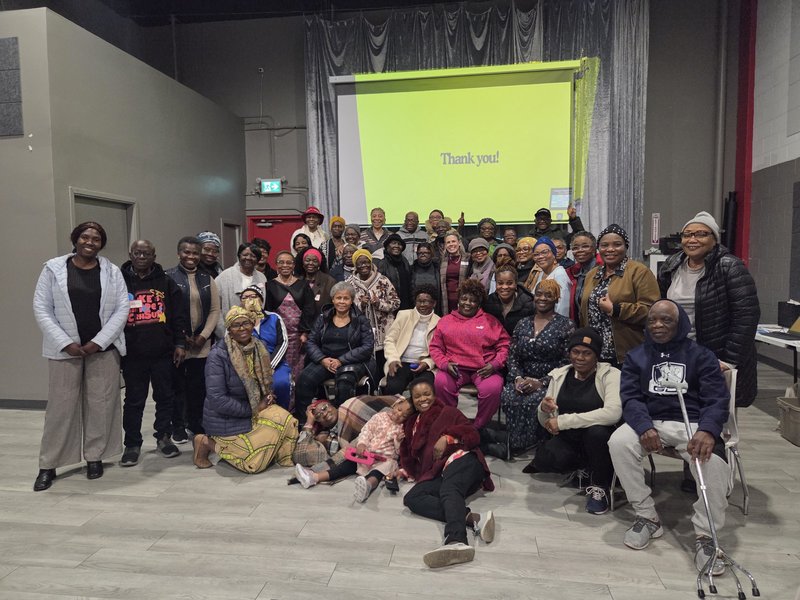
When Bukola Ojemakinde, Executive Director of Bridge to Oasis Foundation, reached out to Alzheimer Calgary, it wasn't because of alarming statistics or a crisis in her community. It was intuition, foresight, and a deep commitment to ensuring Black and Caribbean seniors in Calgary have the resources they need before challenges arise, delivered in a way that honours their cultural context. That proactive spirit has shaped a partnership that's already changing how her community understands and talks about dementia.
AC: What is the mission of Bridge to Oasis?
BO: Our mission is to prioritize the well-being of Seniors of African and Caribbean descent in Canada. Most want to age at home with family, so we offer resources on nutrition, fitness, financial literacy, emergency preparedness, cultural story telling, and more recently, Alzheimer’s and other dementias - all on the bedrock of our culture.
AC: Are there unique needs that your community faces when it comes to dementia awareness and support?
BO: People often attribute serious health conditions, such as dementia and Alzheimer’s, to spiritual attacks or genetic factors, rather than recognizing that these illnesses can progress over time and may be preventable or manageable with proper care. Knowing the right information at the right time can help to slow down the progression and also help caregivers understand how to take care of their loved ones. We want them to be able to identify symptoms at the onset, differentiate them from normal aging, and to understand what resources are available.
AC: What inspired Bridge to Oasis to partner with Alzheimer Calgary for dementia education?
BO: We are fortunate to have funding from New Horizons for Seniors, which supports initiatives that improve the quality of life for seniors. My intuition told me our members either don't know what dementia is, are afraid to talk about it, or don't know what to do if they suspect it. So I reached out to Alzheimer Calgary to get resources early before people need them.
There has been an increase in news about the number of people diagnosed with dementia in Canada, and we want to look more closely at the data for minority groups. This is a potential path to what more and better data could inform. The more we talk about it, the more we can talk about collecting relevant data, doing research, and partnering with doctors.
AC: You've hosted educational sessions with Alzheimer Calgary for your members. What has the response been like?
BO: I’m seeing curiosity among our members. Participants enjoy the fact that this has become a tangible thing they can understand, with practical examples of what it could look like. People have expressed gratitude for knowing - if they are ever diagnosed - they will be able to manage it and live well with dementia.
AC: Your staff will participate in an Alzheimer Calgary training program. What are you hoping your team will gain?
BO: We are excited to receive training from people working in this space. We need to know how to effectively support people who are diagnosed; how to be sensitive, respectful, and treat them with dignity. I want our team to recognize that when working with someone with Alzheimer's or other dementias, humility really counts in providing compassionate care. I want us to understand that our physical spaces need to consider how people with dementia experience things, and when someone is under stress because of their surroundings, how we can understand and appreciate their experience. All of this will inform how we do things.
AC: Looking ahead, how do you hope this partnership with Alzheimer Calgary will continue to grow?
BO: We will continue to share available resources from Alzheimer Calgary with our members, as well as our community. And we’ll continue to look for opportunities to create programming that serves our community.
2025 Alzheimer Walk and Run
A Record-Breaking Year
This milestone 35th anniversary event brought our community together in the most meaningful way, and we couldn't be more grateful. Thanks to over 1,600 participants, 100 volunteers, and 167 teams, we raised a record-breaking $425,000 – 20% more than 2024. These funds will make a real difference in supporting individuals living with Alzheimer's and other dementias, along with their caregivers and families throughout our community.
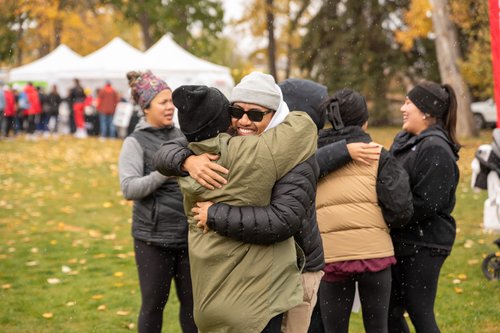
To every participant who laced up their shoes, every volunteer who gave their time, every team captain who rallied their fundraisers, and every donor who contributed – you are the heart of this event.
We extend our heartfelt thanks to Trico LivingWell, our presenting sponsor, whose continued support makes this event possible year after year.
Save the date for 2026: Sunday, October 11
We can't wait to see you all again next year as we continue this journey together.
Community Fundraiser Spotlight
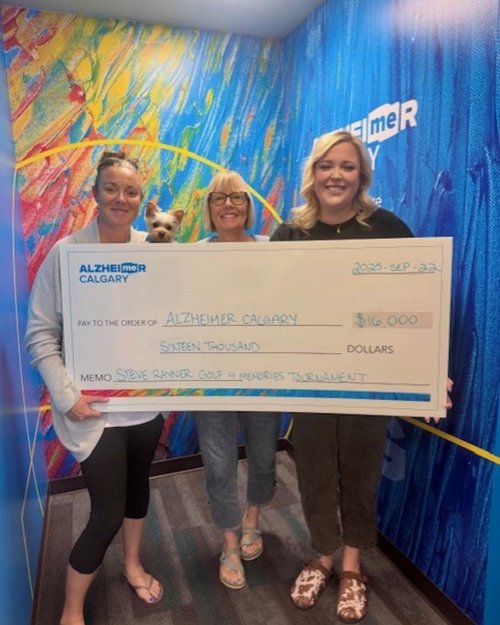
Steve Rayner Golf 4 Memories Tournament
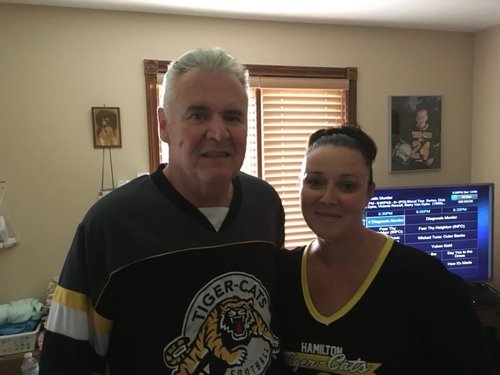
This third annual event raised $15,000 - an unparalleled success and exceeding their fundraising goal by $5,000. Thank you to Terra Penstone for her incredible hard work in organizing the event and bringing the community together to support those impacted by dementia, while honouring the legacy of her father who lived with dementia.
Devin Cooper's Ride to Remember
Devin Cooper's Ride to Remember event raised over $90,000 - an incredible unsurpassed year.
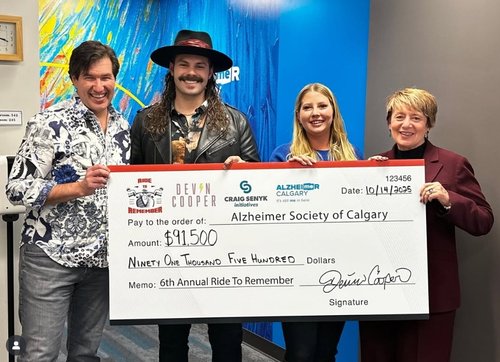
Stay tuned for details of the 2026 event.
Think Dementia is All About Your Family Genes? Think Again.

Some things you can blame your family for - like those curls that just won’t tame themselves, those dimples, or the reason you needed braces in grade school. But Alzheimer's disease is different. Did you know that 95% of cases have nothing to do with family genes?
People who believe it’s genetic may ignore information that could help reduce their risk.
This January, we're sharing awareness that pokes good-natured fun at the things we blame our families for, in an effort to capture attention for what really matters - strategies to help reduce your risk and practical steps you can take right now.
Don't miss it
Subscribe to get even more brain health tips, myth-busting, and hope - delivered to your inbox.
Visit StillMe.ca
Welcome to Club 36
Where every day is better
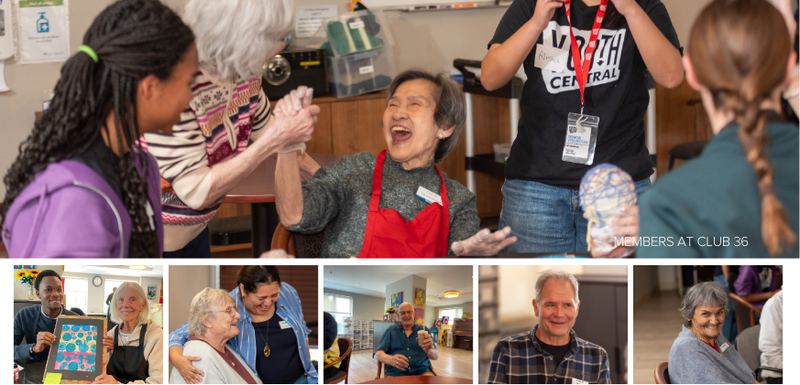
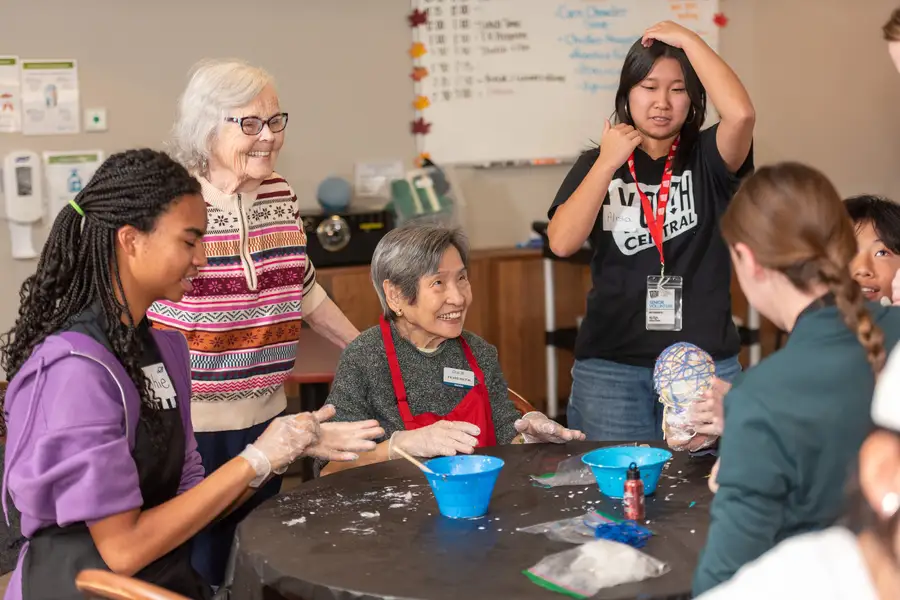
At Club 36, something special happens every day. It's in the laughter shared over morning coffee, the joy of creating art together, the music that brings back cherished memories, and the genuine connections that form.
Recently, a staff member asked Mariana, one of our Club Seton members, "How are you?" Her response captured the heart of what Club 36 is all about: "Better now that I'm here!"
Those five words speak volumes about the welcoming, vibrant community at Club 36. It's a place where individuals living with dementia are celebrated, engaged, and can showcase their strengths.
“Club” offers activities designed to spark joy, stimulate minds, and nurture social connections. From creative pursuits and gentle exercise to music sessions and meaningful conversations, each day is thoughtfully planned to provide quality experiences that honor our members' abilities and interests.
But what truly makes Club 36 special is the sense of belonging our members feel. It's a place where friendships flourish, where there's always something to look forward to, and where everyone is met with warmth, respect, and understanding.
For caregivers, Club 36 provides invaluable respite and peace of mind, knowing their loved ones are in a safe, supportive environment.
For our members, it's a place where they can be themselves, engage with others, and, like Mariana said, feel better just by being there.
Club 36 Staff member asked Mariana, one of our Club Seton members, "How are you?" Her response captured the heart of what Club 36 is all about: "Better now that I'm here!"
More about Club 36
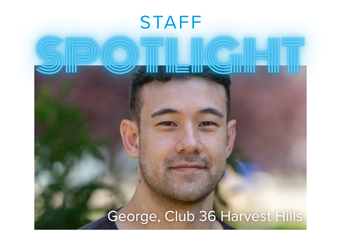
The most fulfilling thing about my work is hearing and learning from our members. They have a lot of wisdom and advice they pass down to me. It gives me a lot of insight and perspective on life that I couldn't get from any book or movie.
One of my favorite memories at work was with one particular member. He and I share a lot of the same tastes in music genres and artists, and we talk about the good memories those songs awaken in us.
More about me ...
- I was born and raised in Calgary
- My education is in rehabilitation therapy
- I've been involved in sports my entire life - mainly ice hockey, volleyball, and basketball
- I enjoy watching all kinds of movies of any genre
- In my spare time I enjoy being active, listening to podcasts, and hanging out with friends
Tips, Ideas, and Resources
Living life to the fullest together
So many people are defying stereotypes and proving that you can still enjoy meaningful experiences, create new memories, and live life to its fullest.
The key: Staying active, staying engaged, and staying connected.
For people living with dementia, keeping minds and bodies active can help delay the progression of symptoms, supporting them to live well for longer. And for caregivers, sharing these moments together strengthens bonds and creates joy for everyone involved.
Discover a World of Possibilities at StillMe.ca
If you haven't explored the Activities section on the StillMe.ca site yet, you're in for a treat! This incredible resource is packed with creative, accessible ideas for activities you can enjoy together – perfect for those cold winter months when you're stuck indoors or close to home.
The best part: Many activities include alternative options or ways to modify them, because we know that abilities can vary from person to person and day to day.
Activities
Check them out
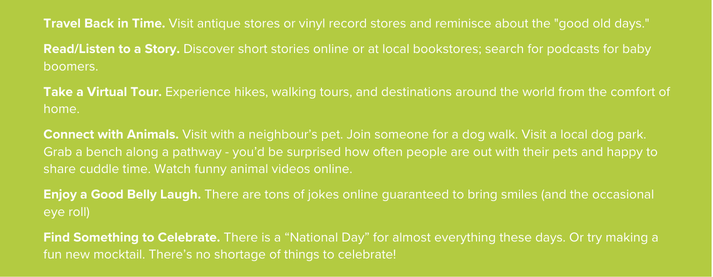
Want more inspiration? Read stories of how people are continuing to live their best lives after a dementia diagnosis. Their journeys remind us that with creativity, connection, and the right support, life can still be full of joy and meaning.

In Memory
Generous donations have been made in memory of the following special people (July - November 2025):
Gerry Benson, Martin George Betts, Florence Campbell Hearn, Eleanore Doris Cappell, Linda Chandler, Byron and Marion Chenger, Gregory (Greg) Wayne Colley, Ronald F. Cooper, Léon Demers, Rosetta Foresto, Jean Fuller, Robert "Bob" Fuller, Ralph Gibson, Darlene Giles, Bree Greenway, Connie Harden, Elizabeth "Betty" Humble, Raja Dillawar Hussain, Dixie Florence, Doreen Johnson, Edgar Jorgensen, Anita Maline Kimball, Maud Knighton, Franc Kovac, Carolyn Laycock, Carol Levitt, Gerard Luijkx, Willard MacLeod, Harry McGowan, Benilde Monaco, Robert 'Bob' George Morrison, Gerry Munro, Janet Catherine Neil, Michael Chukwuemeka (Emeka) Oballa, Margaret "Pauline" Palmer, Ronald "Ron" Patmore, Dorothy Angelina Paul, Hugh Patrick Phelan, Dorathy Elizabeth Prime, Josephine Stella Purcell, Visalakshi (Mohana) Ramachandran, William Gordon (Gordie) Ross, Leonard 'Len' Gust Schienbein, Joyce Schofield, Alistair Scott, Pradeep Alan Silas, Mary Small, Jonina (Nina) Smith, John Sokalski, Lillian Elma Stein, Valerie Stephenson, Giovanni Battista Succurro, Jean Paul Theriault, Mary Theresa Todkill-Gilmour, Mattie Treloar, Roseann Trump, Marjorie Twaddle, Yvonne Cecile (Shank) Coté-Van Helden, Doreen Mae Webber, Elsie Weiss, Elizabeth Whitehead, Margaret Wilkowich, Lee Wilson, Murray Younger, Arthur (Art) Zwar
In Honour
Special gifts have been made to honour (July - November 2025):
Heather May Aberdeen, Stephanie Bitango, Brianna Gilmour, Darlene Hunter, Thomas Huwiler, Mike & Nicole Kesslering, Joan Nixon, Hannah Throckmorton and Dad
Thank You to Our Partners
We are grateful
Together, we are building a stronger support network for families affected by dementia across our community

Donate Now
You can be part of the solution.
Our programs are only possible because of people like you - generous, committed individuals and organizations who share our vision of support for families with dementia.
Donate Now